
Abstract
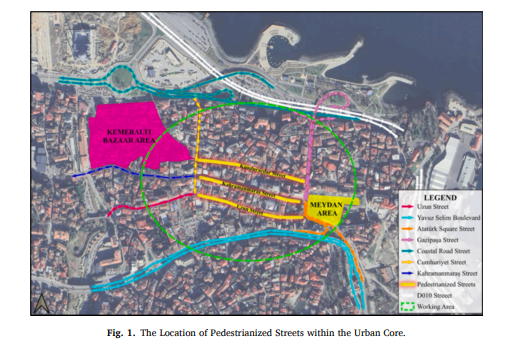
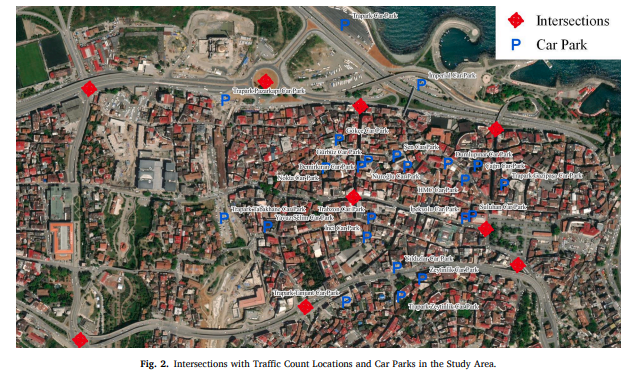
Pedestrianisation schemes are becoming steadily more common, particularly in city centres. They are generally regarded as people-centred, sustainable and economically efficient. At the same time, the scale and permanence of the intervention can bring problems of its own, which makes it important to understand what happens when private vehicles are removed from an area. Doing so affects a great many things: diverted traffic, public transport routes, parking, spatial and economic interaction, social life and accessibility. The effects of the intervention must therefore be measured in all their dimensions through sound traffic assignment and forecasting, and appropriate scenarios and options developed. This study sets out an integrated pedestrianisation proposal for the Kahramanmaraş Caddesi area in central Trabzon. The preferred option was identified through appropriate traffic assignment and a set of success criteria. The effects of that option were then examined, and mitigation strategies developed jointly through a participatory process involving transport-focused NGOs familiar with the city, associations representing vulnerable groups, professional chambers and public bodies (among them the General Directorate of State Hydraulic Works, the highways authority, municipalities, urban infrastructure units, the governor's office and the police and transport departments). The strategies cover traffic diversion, parking access, the relocation of minibus stops, logistics arrangements and emergency response routes.
View the full article ↗