
Abstract
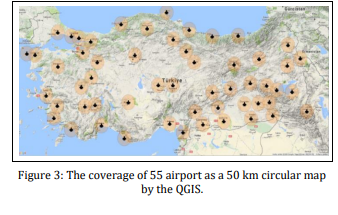
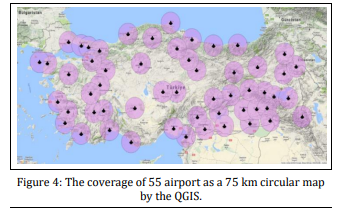
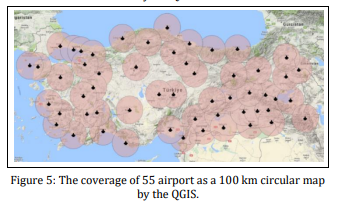
Airport accessibility and travellers' choice of airport are important measures of how competitive an airport is. When passengers select a route, what they are really looking for is a complete journey, from door to door. The factors influencing that choice therefore extend well beyond the price and quality of the air service itself: the choice of a particular service and a particular airport depends to a large degree on how accessible the airport is. The factors involved fall broadly into two categories. Those reflecting fares, service frequency and the number of destinations served are described as “air side”; those concerning access to the airport are described as “land side”. Airports are generally sited around cities, at a reasonable distance of some 50 km. Since airport access can affect passenger demand, this study examines airport coverage in Türkiye using catchment radii of 50, 75 and 100 km from city centres. Its principal aim is to establish whether new airports are needed for domestic flights. The results show that, taking a 100 km radius as the criterion, only ten cities with a combined population of some 2.5 million would fall outside an airport catchment. Socio-economic characteristics are closely related to airport siting, so accessibility measures were compared with the particular characteristics of each city and potential locations for new airports identified.
View the full article ↗