
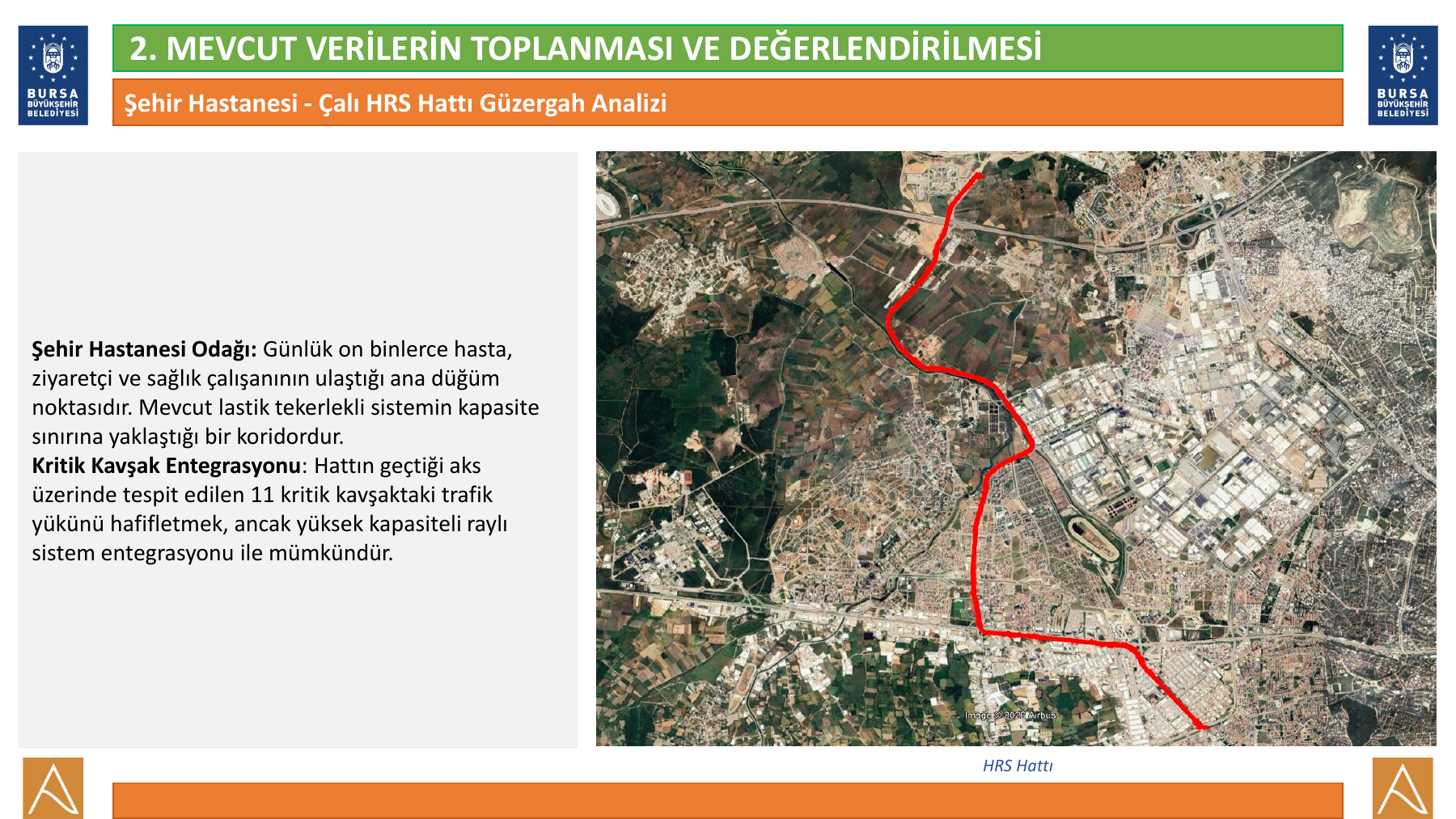
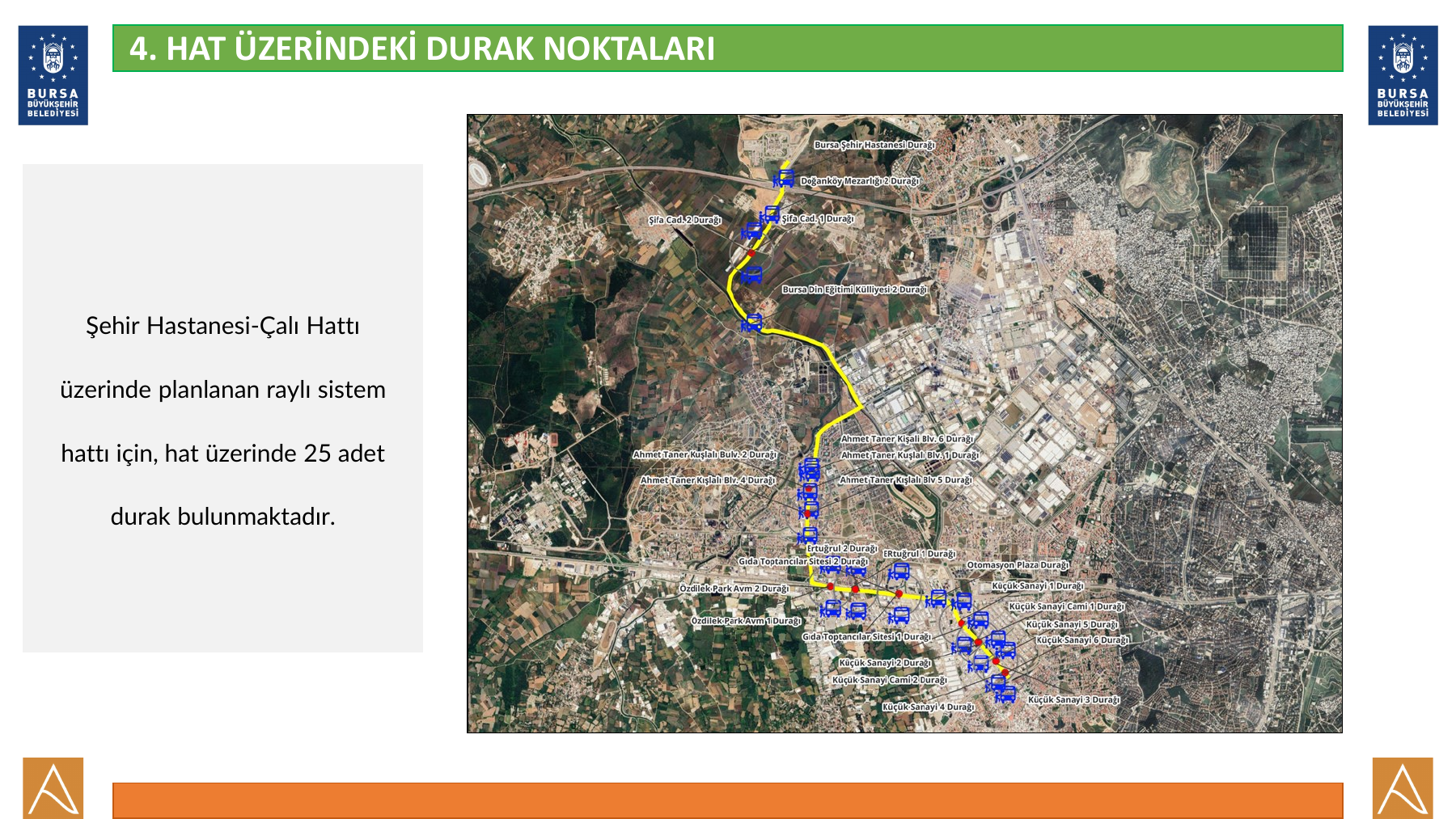
The fast-growing residential areas of south-west Bursa, the new housing around Çalı and the heavy daily demand generated by the City Hospital are placing visible strain on the existing road network. The study sets out rail options for the Kızılcıklı–Çalı and City Hospital–Çalı corridors that will reduce dependence on the private car, work as part of the city's existing public transport system and support long-term development decisions.
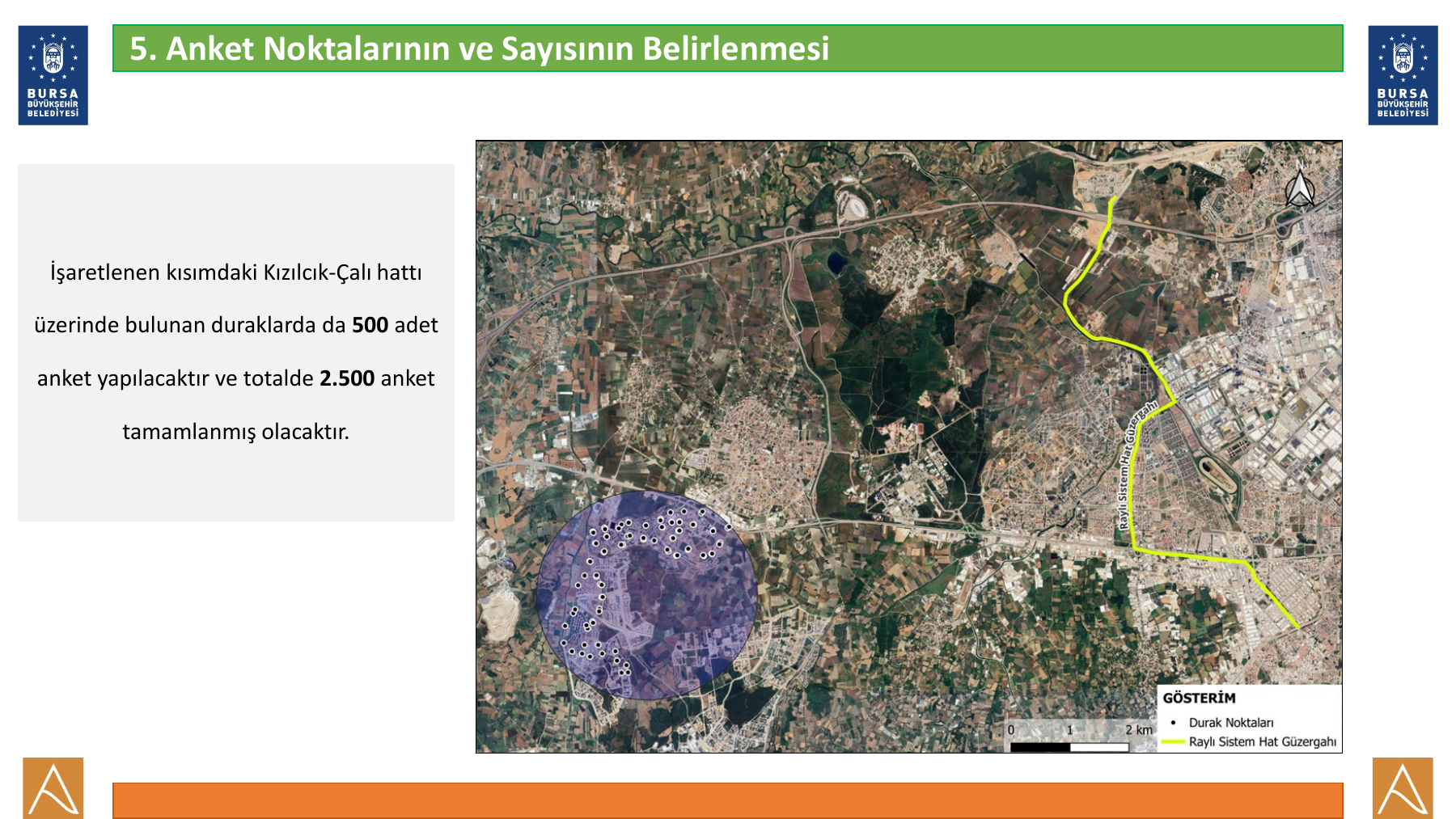
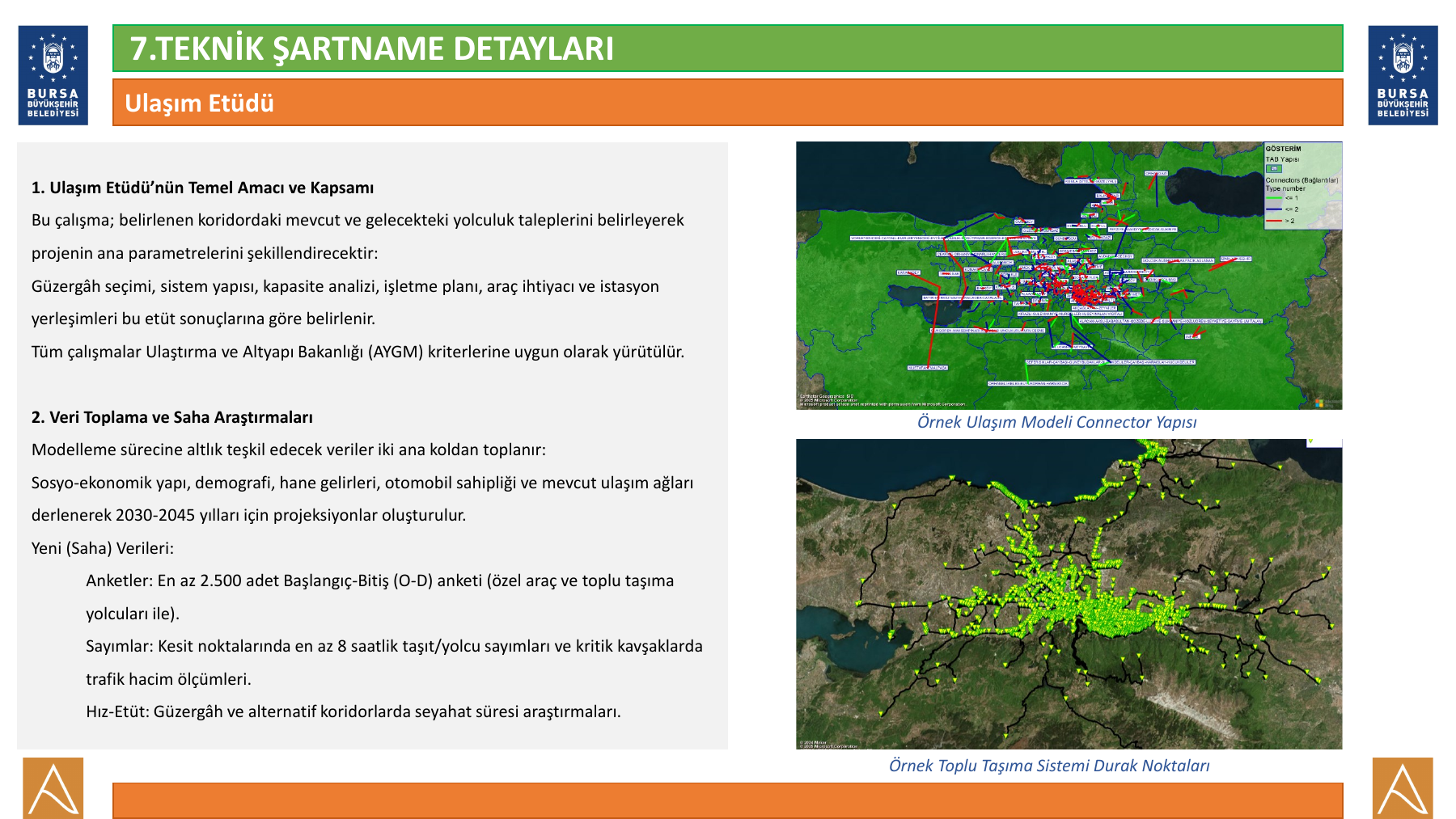
To understand travel behaviour in the study area in detail, an origin–destination survey programme covering 2,500 households was designed, traffic counts were planned at the 11 critical junctions the line will affect, and the resulting data were carried into the transport model. Current and future travel demand is assessed alongside peak-hour conditions, junction performance, bus connections and the principal trip attractors.
The route options are compared not simply on length but on stop accessibility, journey time, ease of interchange, points of conflict with the road network, operating requirements, capital cost and the contribution each would make to urban development. The aim is a rail investment framework for Bursa's south-west corridor that is deliverable, capable of being built in stages and sustainable.
City: Bursa
Country: Türkiye
Client: Bursa Metropolitan Municipality
Project Period: 2025–2026
Scope of Work: Origin–destination survey of 2,500 households, traffic counts at 11 critical junctions, transport modelling, comparison of route options, examination of interactions with the road network, and feasibility assessment.